Let's talk


About us
Beabstracto is a UX studio in Munich. We make complex expert systems usable, in banking and industry. Founder Thiago Andrade brings engineering experience and UX design together.
I'm Thiago Andrade, founder of Beabstracto. Before becoming a UX designer, I worked inside engineering systems, with automation, internal tools and SAP workflows. That shapes how I think today: systems and workflows first, screens second.
Beabstracto supports expert systems from as-is analysis to rollout, with UX that experts actually trust. We work across the DACH region, in German and English, and we speak the language of expert teams and development.
I know technical users from the inside, because I was one.
I started at the factory as a helper, assisting with steam-turbine assembly processes and preparing tools for machining. As an industrial engineer I prepared equipment for balancing steam-turbine rotors at high speed in a vacuum, with my first contact with technology for automating drawings and specification processes for turbine assembly and machining in SAP, PTC Creo and AutoCAD. I served the factory in non-conformity situations and worked on solving problems caused by design failures.
Then I moved into construction engineering, where I defined the product and its internal equipment such as emergency valves, rotors and blade carriers, until I became technical lead. There I was in charge of managing client demands from different sectors like sugar & alcohol, paper & pulp, thermal power plants, creating and elaborating diagrams (P&IDs) to define the different equipment in the power-generation system, whether pumps, condensers, instrumentation.
Until I became an application engineer, responsible for the thermodynamic sizing of steam turbines and their auxiliaries such as gearboxes and generators. There I developed computer-aided side projects for better results with the thermodynamic calculations. Looking for intuitive ways to calculate, with an always creative mind, I founded Beabstracto, which alongside my work at Siemens helped several small businesses in my hometown position themselves on social media and the internet by creating websites, videos and marketing material.
Until I moved to Germany, where I worked as a UX designer at different companies in the Munich region, initially serving an agency that attended clients such as Siemens, a car manufacturer, MER and GS+Werkzeugmaschinen, creating platforms, internal software and design systems.
I founded my first UX community, which took me to the Google stage and supported more than 350 designers in the Munich region with free events featuring specialists in the field.
Until I stabilised Beabstracto as a company that today has a team of 5 designers where I act as lead, serving clients across different areas such as industrial furnaces, banking and tax software, ITSM and cloud management, document management systems, AI-first engineering-aided design and much more.
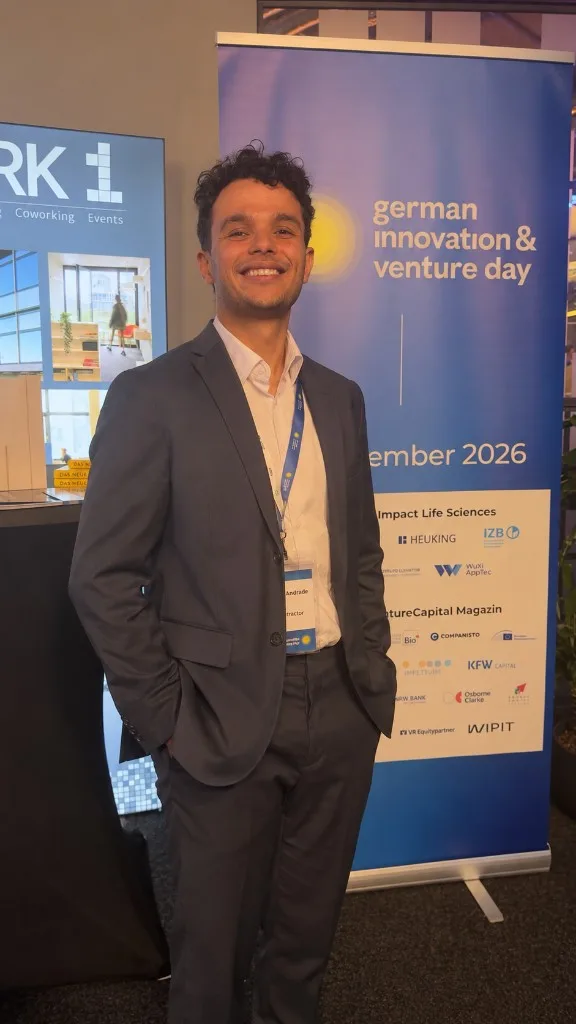
My engineering background led me to UX. In-house, over years, I experienced how expert systems are actually used across different industries and technology companies, and where they fail in daily work.
Today, through Beabstracto, I support companies that build and run exactly these kinds of expert systems. For that I set up a studio of UX professionals with specializations in concrete areas: regulation, mechanical industry, architecture, law. That way the UX fits the expert world, not just the surface.
Today we specialise in building UX teams of specialist professionals across different domains.
We are a team of people who are curious about what is hard, love to learn, and believe that empathising is what makes us more intelligent.
The studio today: a team of 5 designers, with the founder as lead, serving clients across different domains, industrial furnaces, banking and tax software, ITSM and cloud management, document management systems, AI-first engineering-aided design and more.
Excerpt from stations that shape Beabstracto today. Client names appear only where approved, otherwise anonymous.
Engineering & automation
Siemens (Brazil)
2016 to 2021
Work in an industrial engineering context: automating recurring SAP workflows, internal tools for engineers, Python-based calculation helpers. This is where the path from engineering to UX began.
UX/Product Designer
Agency (Munich)
2021 to 2023
Work at a Munich agency with clients such as Siemens, a car manufacturer, MER and GS+Werkzeugmaschinen: platforms, internal software and design systems.
UX/Product Design Lead
Ebner Industrieofenbau
2024 to 2025
Modernizing legacy software for expert users: product architecture, information architecture, user flows, high-fidelity concepts and design-system direction, without losing the depth of the domain.
Workflow Designer & UX/UI Designer
DocuWare
2023 to 2026
Product design for a mature B2B SaaS platform: workflow designer, enterprise configuration, design-system foundations and UX quality as a measurable quantity, pragmatic and hedonic quality, adoption and usage.
UX strategy, information architecture & prototype
Vendor of a withholding-tax reclaim software
since 2025
External UX consulting for the vendor of a withholding-tax reclaim software: UX strategy, information architecture, interaction design and a realistic prototype for reporting workflows under SLA pressure. Beabstracto as an external consultant, not as part of the vendor's team.
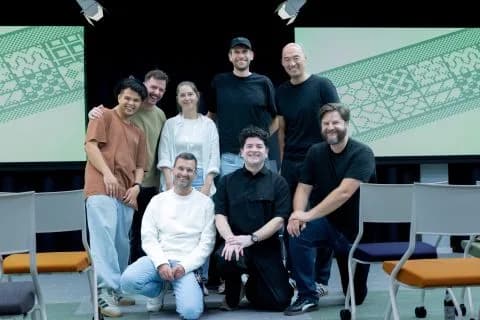
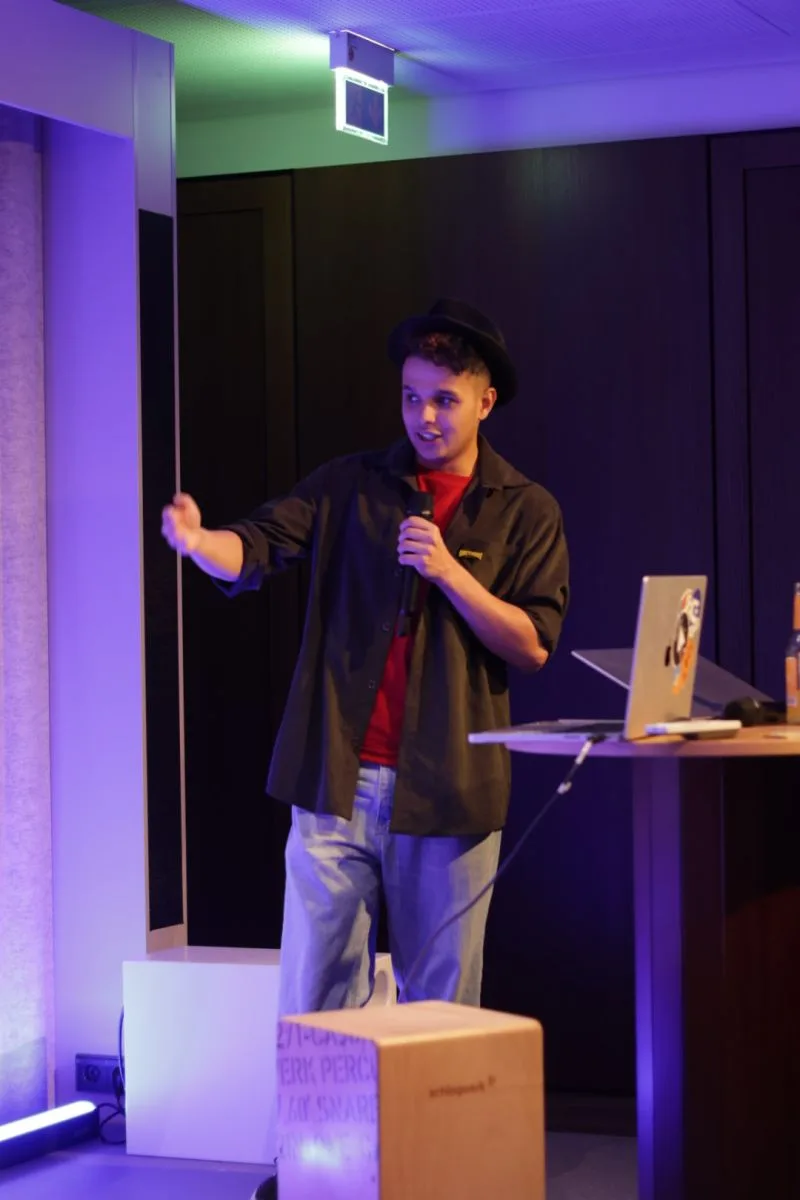
Thiago hosts the UX community in Munich. On 8 November 2023 almost 100 people came to The Product Brew at Netlight, with talks on design systems (VW Elli by Netlight), the Opportunity Solution Tree and the customer journey at DATEV.
On 15 September 2025 the first Detach followed at Google Munich, with OroraTech, Material 3 Expressive (Google) and Footprint Intelligence.
For clients this means: a network of designers and researchers we know and can judge, and bring into projects when a topic needs more hands or a specific specialisation.
Detach
Tell us about your expert system. We'll look at where UX pays off most.
Book an initial talk