Siemens - Fertigungsprozesse
Definition von Fertigungsprozessen für Dampfturbinen, die Millionen von Menschen beeinflussen
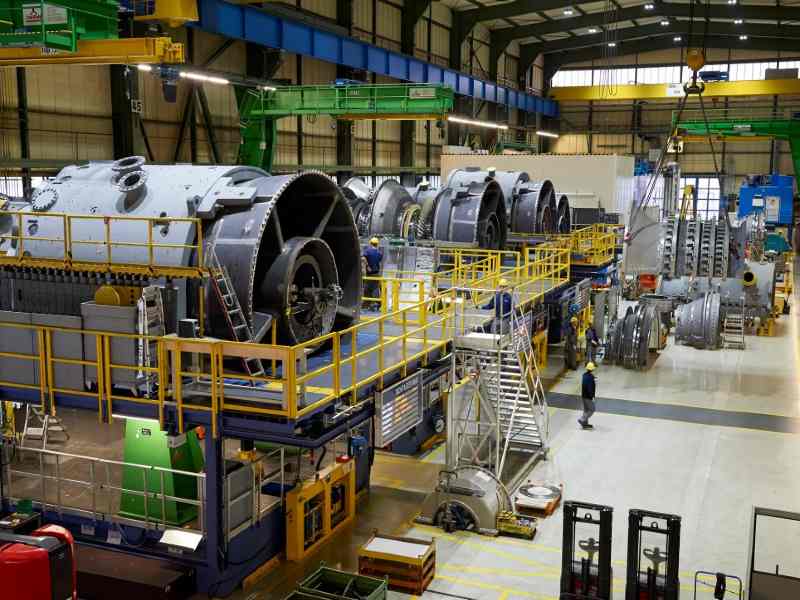
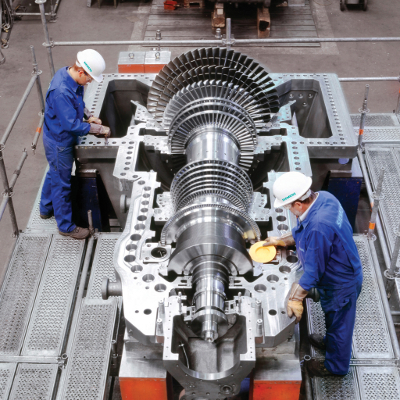
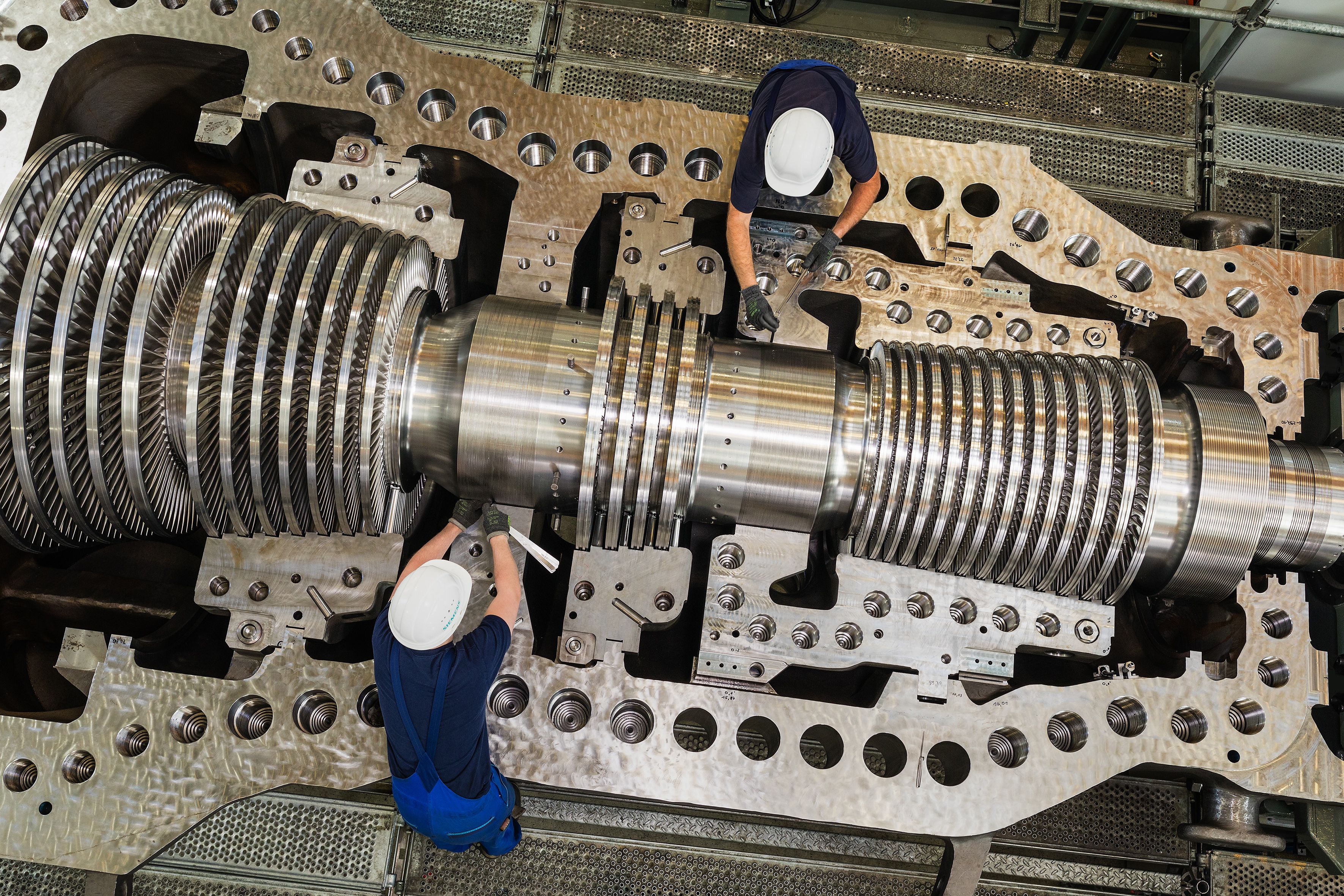
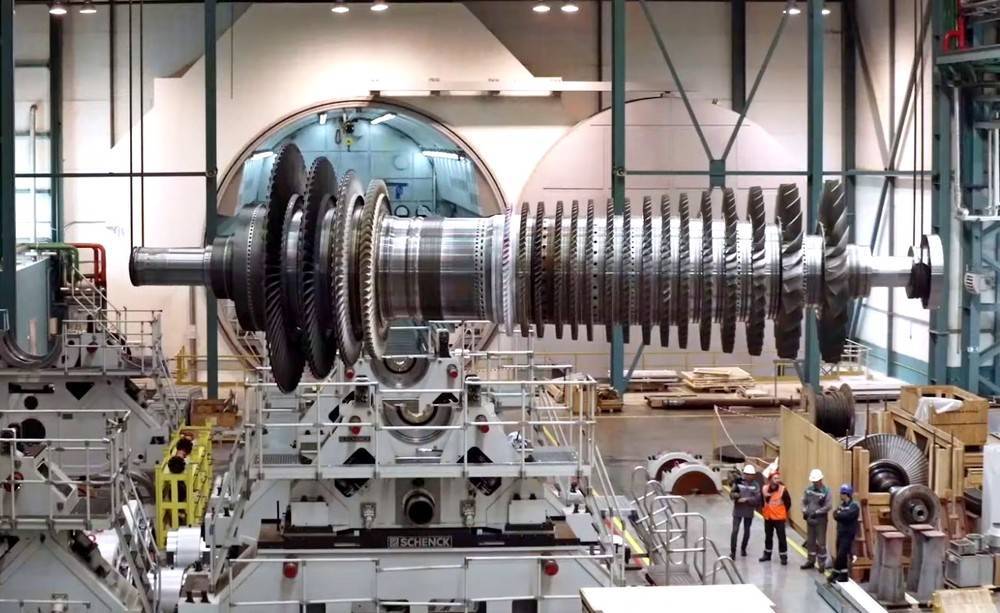
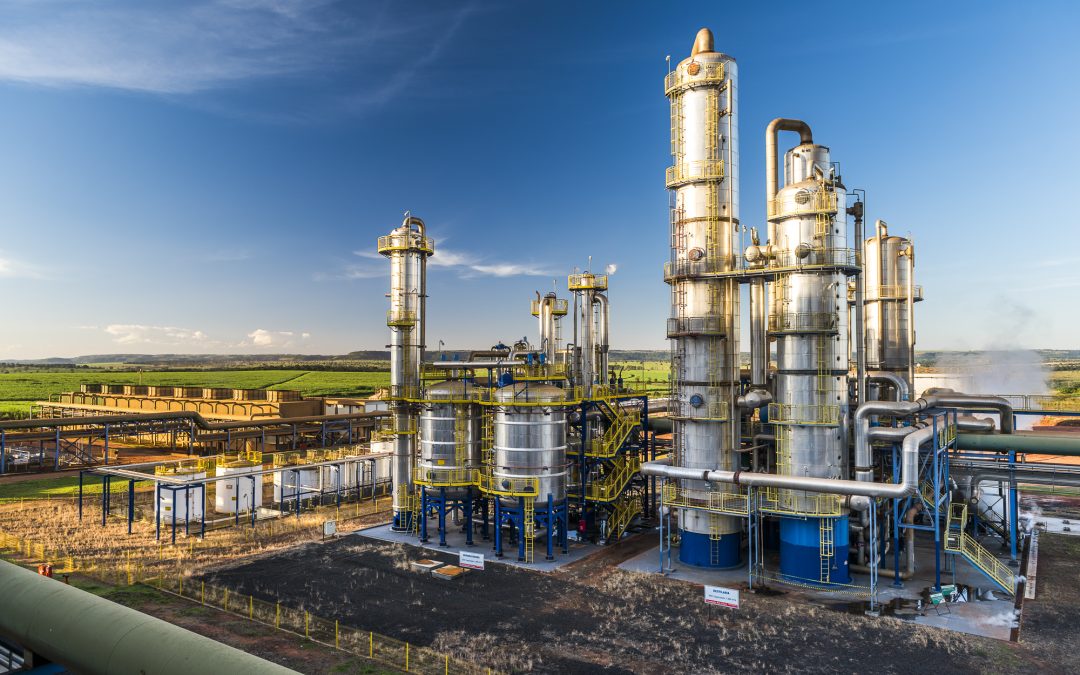
Stellen Sie sich folgende Situation vor: Sie arbeiten in einer Dampfturbinenfabrik: riesige Maschinen, die für die Energieerzeugung in vielen Ländern verantwortlich sind, insbesondere in Südamerika und den Vereinigten Staaten.
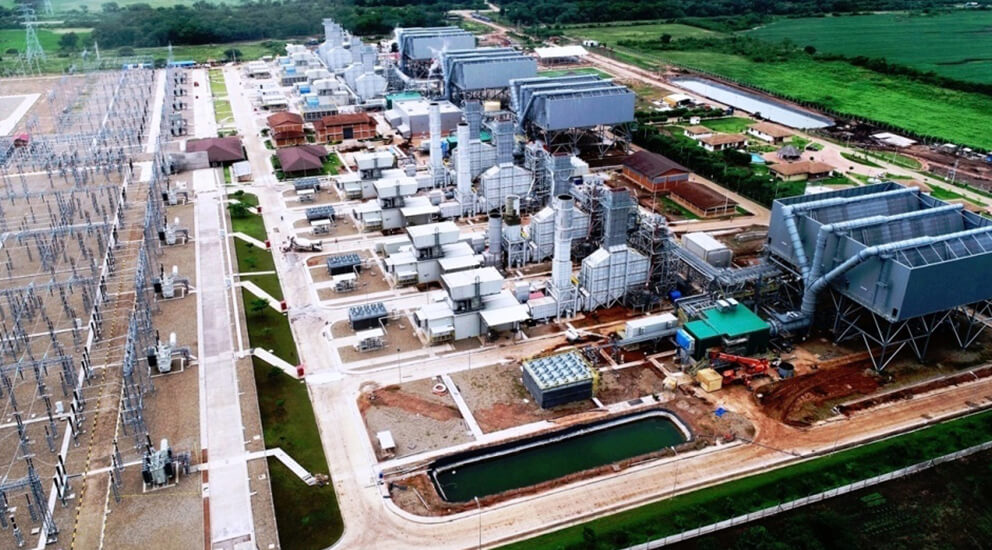
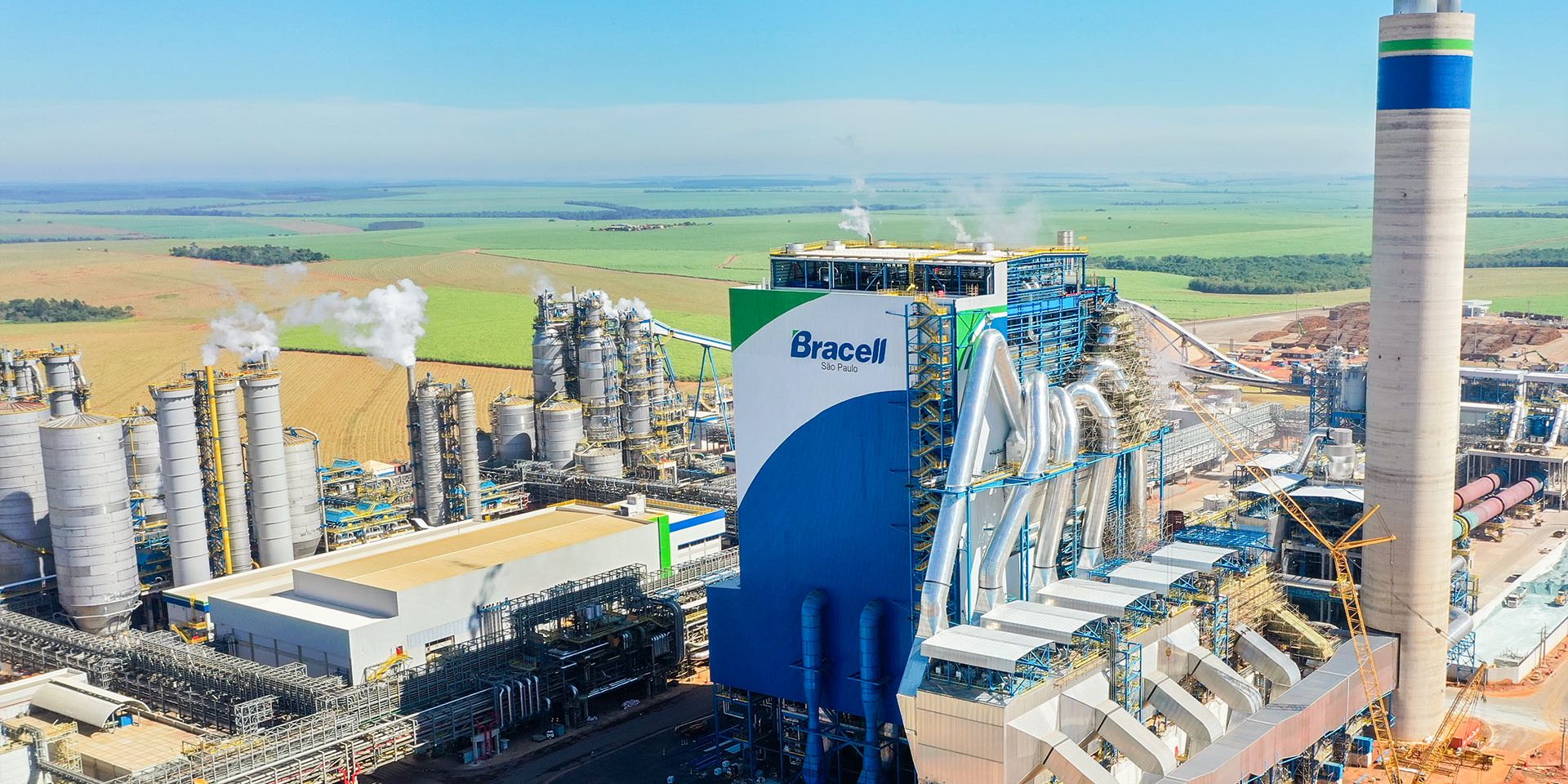
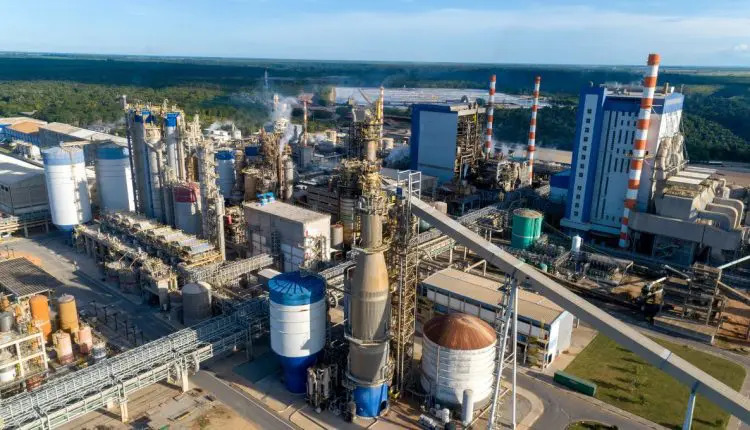
Diese Fabrik, in der Sie arbeiten, war für Großprojekte verantwortlich, wie zum Beispiel das Projekt fürEnde Andina im Jahr 2017,das die Energieerzeugungskapazität des bolivianischen nationalen Verbundsystems um 66 % erhöht hat oder für die Produktion der Maschinen, die für die Energieerzeugung für diegrößte Zellstoff- und Papierfabrik der Welt verantwortlich sind.
Hier arbeiten Tausende von Menschen: Ingenieurwesen, Montage, Vorbereitung, Buchhaltung, Einkauf, Vertrieb und vieles mehr, um die Energieerzeugung möglich zu machen.
Jede dieser Maschinen kann zwischen 8 Monaten und 1 Jahr für die Herstellung benötigen und weitere 1 Jahr für die Installation und Inbetriebnahme, mit variablen Kosten zwischen 1.000.000 € und 50.000.000 €.are you still imagining you are an Industrial Engineer at this factory? Because today you are the main persona.





And what is your role in this world?
Und was ist deine Rolle?
Die Herstellungsprozesse für diese Maschinen zu definieren, die das Leben von Millionen von Menschen in den USA und Lateinamerika beeinflussen.
Who are the users?
A little more about you...
The main persona (you) are the Industrial Engineers: Composing a team of 5 different professionals, these are the ones who are responsible to understand the different fabrication processes from machining, assembly and troubleshooting.
These professionals count with years of experience in the mechanical field, they understand different mechanical processes and are focused on delivering the work they should do - working overtime is not a complain, going to the factory for emergencies is not either, these guys are ready for any problem that could come up at any time.
Most of them are mechanical engineers with different further specializations, oftenly they are welding experts, Six Sigma black belts, experienced assemblers or CNC machinists.
Their (your 😉) main role is to improve processes, minimize fabrication wastes and think of smart ways to reduce costs with their fabrication expertise. In addition to that, you need to define the fabrication processes for the machines to be done.
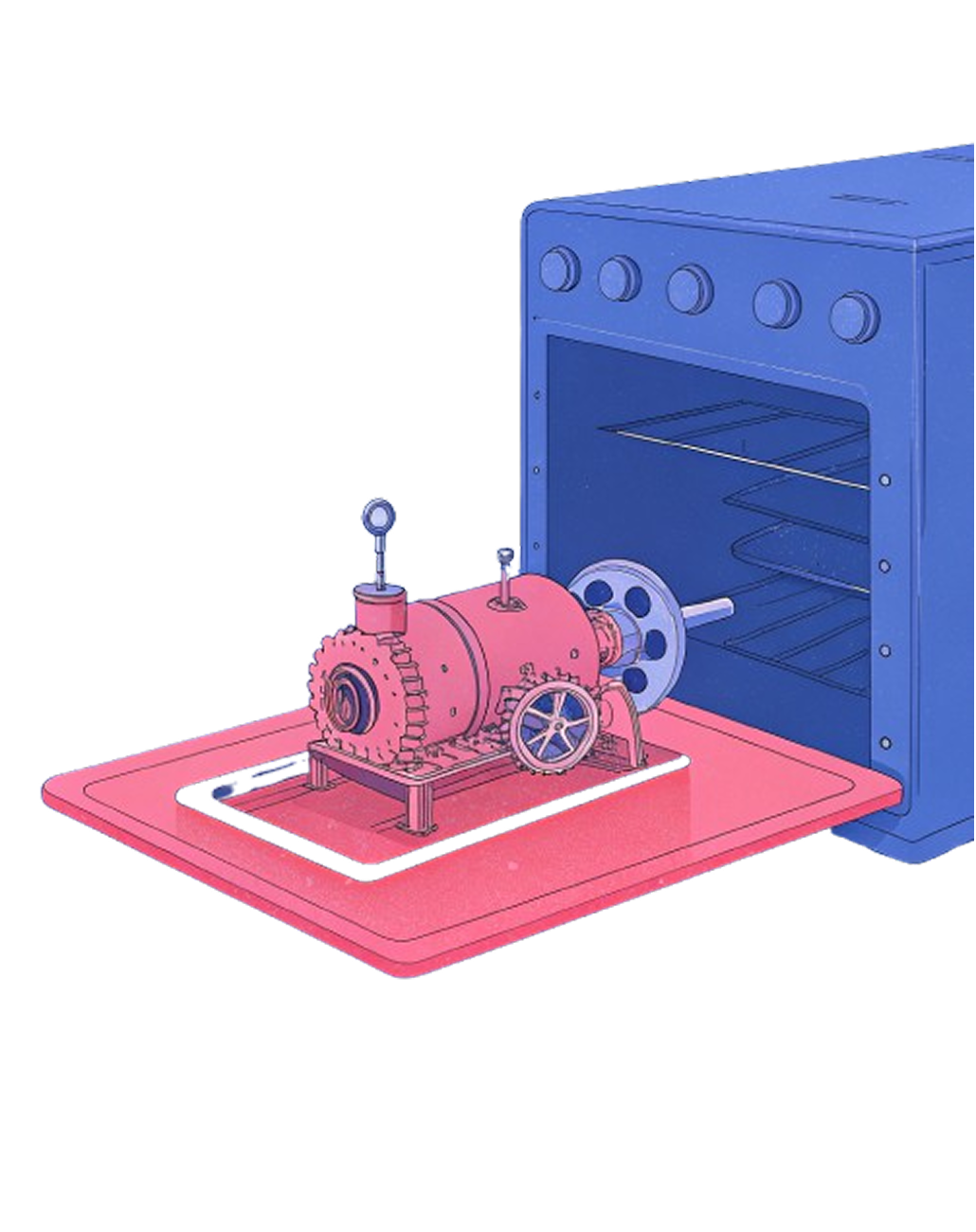
But... what are fabrication processes? It is basically a recipe, a document stored in SAP that factory workers have access in the shopfloor. It consists of the different steps for getting a specific part assembled or machined. A silly (and simplified) example could be something like:
How to assemble a turbine
- Mix all internal parts in a bowl
- Take them to an oven
- Serve with salt



- Persona: Carlos, the Industrial Engineer
- Quote: "If I have to look at one more stack of paper to understand what needs to be done, I might just turn into steam myself. I want to focus on improving the process, not on digging through a massive list to find components that need a manufacturing process in SAP — and then manually rewriting the same process I’ve already written over and over again."
- Age: 32
- Tools and software: AutoCAD, Excel, SAP, Radio for factory communication
- Frequently works on the shop floor, juggling between machines, meetings, and urgent tasks.
- Regularly works overtime to fix bottlenecks that could delay production timelines.
- Stays in close contact with welders, assemblers, and operators to identify inefficiencies and opportunities for improvement.
- Handles multiple complex projects simultaneously, often under tight deadlines.
- Quickly identify components that require manufacturing or assembly.
- Avoid manually filtering out commercial (pre-made) items from component lists.
- Standardize workflows for recurring or similar parts.
- Automate repetitive documentation steps so he can focus on value-adding tasks.
- Wastes time dealing with scattered, non-digitalized information.
- Spends hours manually reviewing component lists just to spot what matters.
- Relies heavily on tacit, experience-based knowledge that isn’t easy to share or scale.
- Feels frustrated because administrative overhead limits time spent on process optimization.
What we have done
The work was carried out from inside the Industrial Engineering department, with direct access to the engineers who create the fabrication processes. The main responsibilities in this project were:
Project Goals
Digitalization
Minimize the needs of printed documents for the creation of fabrication processes.

Performance
Enable industrial engineers to create fabrication processes faster.
Standardization
Indetifying patterns in manufacturing processes and stardandize fabrication processes.

Automation
Automate processes to enable industrial engineers focus on process improvements rather than documentation.
import { useState } from 'react';function FabricationRouting() {const [steps, setSteps] = useState([{ id: 1, name: "CNC Machining" },{ id: 2, name: "Welding" },{ id: 3, name: "Assembly" },]);return (<ul>{steps.map(step => (<li key={step.id}>{step.name}</li>))}</ul>)}
First Steps: Observation
Before defining the problem, I started by understanding the environment from pre-sales to the delivery of a steam turbine. And where would be better to start if not in the initial touchpoint that an industrial engineer has before creating a fabrication process: the component lists.
The Component Lists
As you might imagine, a steam turbine, just as any other machine, is composed by multiple parts, these parts, by smaller parts and so on. All these parts are grouped in different lists, and these are the inputs for creating the fabrication processes.
An industrial engineer recieves a pile of printed component lists per main part of the turbine, the first step is to identify what are the commercial items, like bolts, or screws, in the list and exclude them as they don't need manufacturing or assembly.
This is done by manually checking each item in the list, and eye screening all of the different items, the ones that will be assembled or manufactured in the factory are highlighted with a marker and added to "fabrication process creation queue."
Some (approximate) numbers
- Steam Turbine
- 1
- Main Components (Lists)
- 34
- Subcomponents per list
- 500
- Items that need a fabrication process per list
- 8-30
Taking a closer look...
Lists are piled and items are highlighted - is the process over?
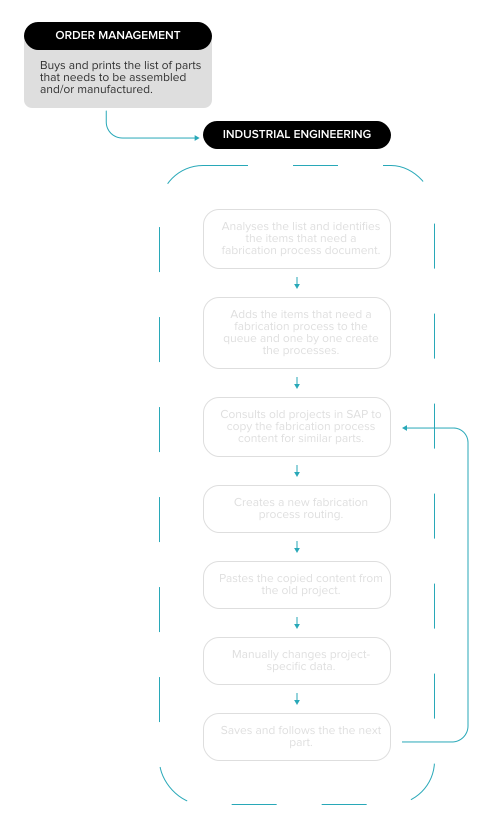
Unfortunately for our industial engineer (you 😉), the job to be done isn't over yet. You stil have to create the fabrication process.
Apart of the manual work to identify what are the items, you still need to create the documentation for the fabrication process. Steam turbines are custom machines, which means that even tho the main components are always the same, they are always different from project to project. Imagine like a cake: you will always need more or less the same, but the ingredients might differ: you can make a vegan cake without eggs, or a lactose free without milk. Well, with steam turbines it's the same, you can copy the recipe but the ingredients amount, the cooking order and parameters will always be different.
To overcome this challenge, a workaround that industrial engineers found is copying fabrication process documents from older projects, and here comes another challenge: finding old projects codes to consult their fabrication processes - it's just like a guessing game but it isn't over after you guessed, you still need to change all the project specific details in a very veeery long text.
Have you felt the pain? Because we're close to define the problem statement:
Key Problems
As part of creating the problem statement, identifying the key problems to be solved was key. For that, I wrote down the problems I imagined that should be solved and validated with the end users by asking feedback — this might seem like something that happened easily and straight, but it actually wasn't. It took me months of working closely with them, creating fabrication processes myself, juggling between factory needs and emergencies to finally figure out what’s stated below:
But, how might we solve these problems?
Starting ideation...
With key problems and the problem statement in mind, it was time to start thinking of ways to solve them.
How might we...?
With clearly defined problems validated with industrial engineers, we began imagining real solutions that could transform how fabrication processes are created. The "How might we..." questions guided our ideation towards our project goals (automation, efficiency, and scalability).
First we started by creating multiple questions with the problems in mind, after that we noticed there were many questions that would potentially be solved with the same solutions – this led us to group HMWs into 4 key problem areas.
1. Automate and Reuse Documentation
- HMW automate the creation of fabrication-process documents for recurring parts?
- HMW allow engineers to reuse and adapt existing processes with minimal effort?
- HMW make it easier to find and access past fabrication documents relevant to current project?
2. Smart Component Identification
- HMW industrial engineers quickly identify which components require a fabrication process?
- HMW reduce or eliminate the need to manually scan and highlight printed component lists?
- HMW digitally separate commercial and non-commercial items in component lists?
3. Flexible Process Standardization
- HMW identify patterns and standardize processes across different turbine projects?
- HMW document expert knowledge in a scalable and reusable format?
- HMW ensure flexibility in standardized processes to accommodate custom project needs?
4. Reduce Overload and Gain Focus
- HMW reduce the administrative burden so engineers can focus on process optimization?
- HMW prioritize tasks that truly require human expertise?
- HMW help engineers balance urgent tasks with strategic improvement initiatives?
How Might We – Solutions by Challenge
Answering the questions, one idea at a time
There was no single workshop that solved everything. The ideas came from iterating inside the department: proposing, visualizing, testing with the engineers and refining until a version was solid enough to be validated.
How the ideas took shape
Each idea was visualized before being pitched, tested as a small MVP with the Industrial Engineers and either dropped or refined. The version that held up in daily use was then presented together with the engineers to upper management, which gave the project its mandate.
Below are some of the ideas that were explored for the different problem areas:
- Template Library in SAP - Excel Macro-Based Generator - SAP Script Automation - Smart Fabrication Process Finder - Tagging System for Fabrication Documents - Fabrication Process Library in Excel - Fabrication Process Naming Convention for Search - Recent-Projects Smart Recommender - Excel-to-SAP Process Uploader - SAP Bookmark/Favorite System for Reused Templates
- Excel Add-on for Component Filtering - Virtual BOM Lists Filter - Visual Indicator in SAP Item List - Dynamic BOM Viewer in Excel - Cross-Reference Tool with Vendor List - Pre-processing Script - Colored Excel Output (Conditional Formatting)
- Pattern Recognition via Excel Templates - Central Wiki on Intranet for Fabrication Processes - SAP Template Cloning with Conditional Fields - Versioned Modular Process Blocks - Excel + Rules Engine - Master Process Templates with Variables - SAP + Excel Hybrid Editor - Visualization of Process Flow Similarities - Process Cards for Repeated Blocks - Internal Forum for Process Sharing
- Automated Weekly Task Prioritizer (Excel Dashboard) - Checklist Auto-Preenchido no SAP - Process Inbox (Kanban View) - Role-Based Task Assignment Matrix - Excel Bot for Smart Notifications - Email Digest of Process Bottlenecks - SAP Notification System with Smart Filters - Excel Button to Generate Process PDFs Automatically (no more SAP) - Process Completion % Tracker
Time to converge
Clustering and prioritizing
From the ideas, we prioritized the ones that offered the best balance between impact and effort while aligning with our project objectives. Here are the main ideas we moved forward with:
- Excel-to-SAP Process Uploader:
- Upload process documentation directly from Excel to SAP, eliminating manual entry and reducing human error.
- Fabrication Process Library in Excel:
- Centralized library of fabrication processes stored in Excel, enabling easy search, access, and reuse of existing documentation.
- SAP Script Automation:
- Automate repetitive SAP tasks like process creation and updates, saving engineers hours of administrative work.
- Excel Macro-Based Generator:
- Generate standard fabrication process documents automatically using Excel macros based on predefined templates.
- Dynamic BOM Viewer in Excel:
- Interactive Bill of Materials (BOM) viewer in Excel that filters, highlights, and categorizes components automatically.
- SAP + Excel Hybrid Editor:
- Combine the flexibility of Excel editing with SAP integration to streamline process documentation and updates.
- Excel Button to Generate Process PDFs Automatically (no more SAP):
- Instantly create ready-to-use PDF documents for fabrication processes straight from Excel, bypassing SAP.
- Process Completion % Tracker:
- Track fabrication process completion status in real time, giving better visibility over project progress.
The Solution
From the ideas, we prioritized the most convenient ones that best aligned with the project objectives, considering their impact and required effort. The main ideas we moved forward with were:
- Excel-to-SAP Process Uploader:
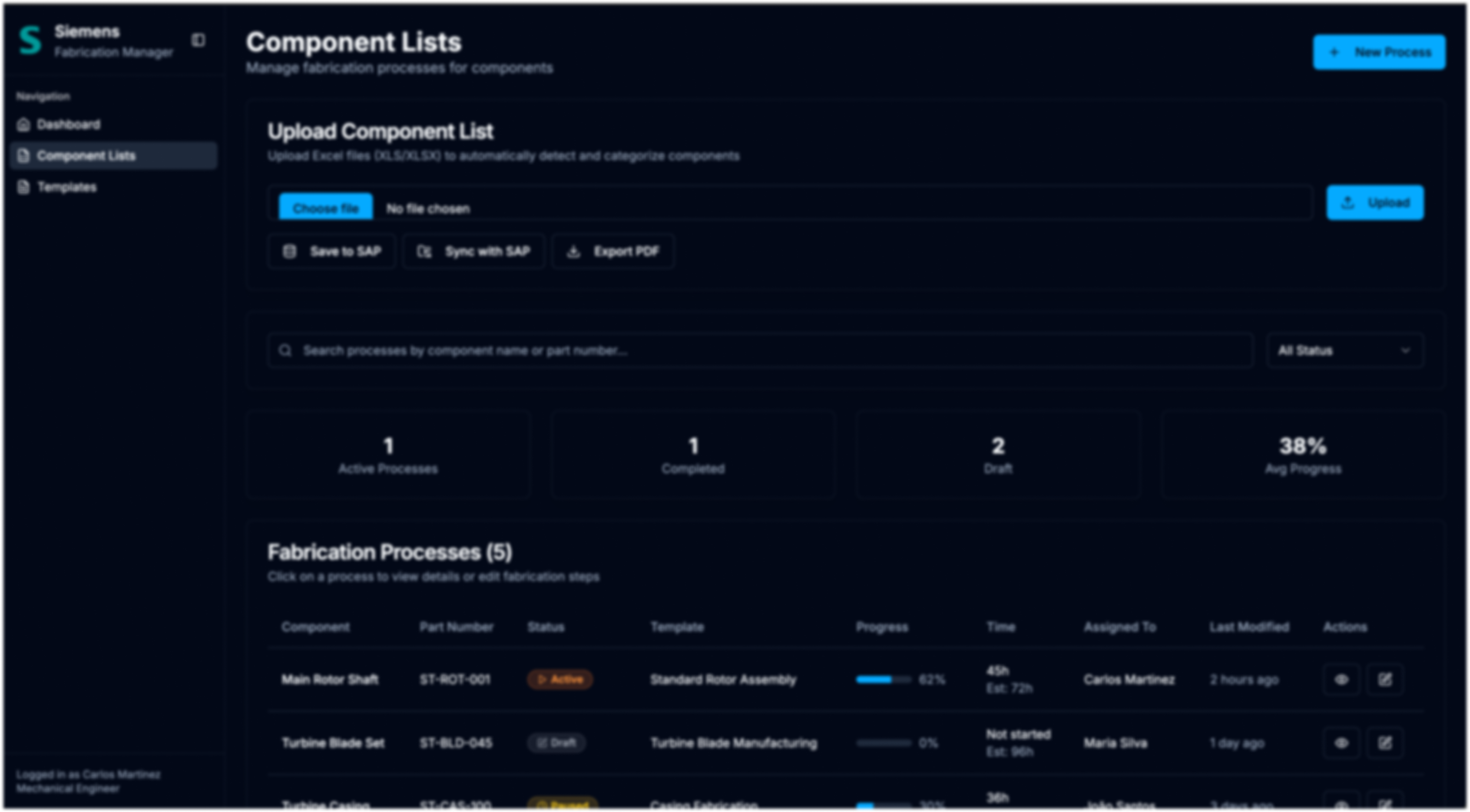
- - Upload component lists in XLSX format directly into the app, which parses and filters relevant parts automatically.
- - Eliminates the need for manual highlighting of component lists on paper.
- - Synchronizes fabrication processes directly with SAP with one click.
- - Reduces risk of human error and cuts documentation time by up to 45%.
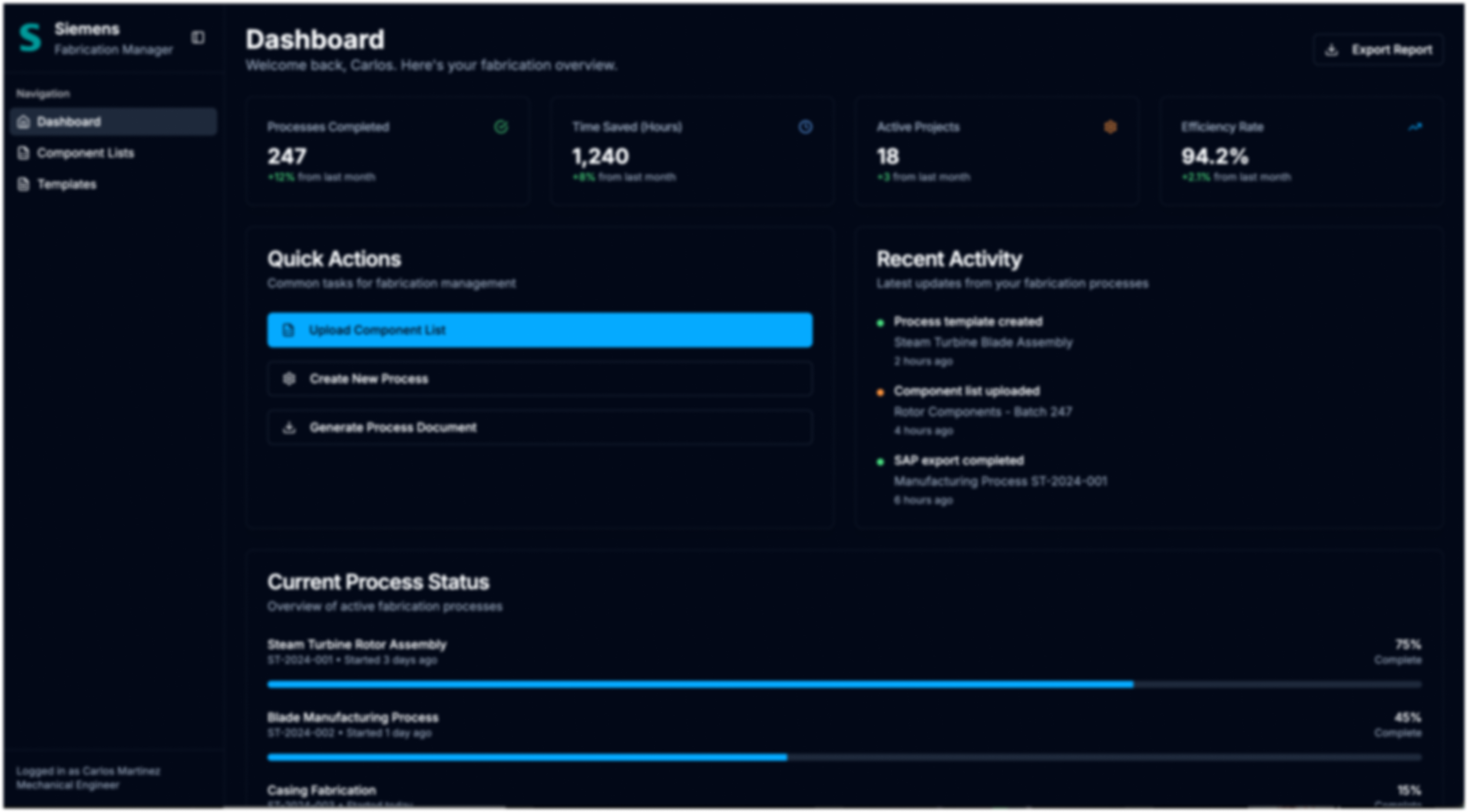
- Process Monitoring Dashboard:
- - Real-time visibility into all ongoing and completed fabrication processes.
- - Metrics on time saved, efficiency rate and process completion help stakeholders make data-driven decisions.
- - Improves strategic planning and reduces firefighting culture on the shopfloor.
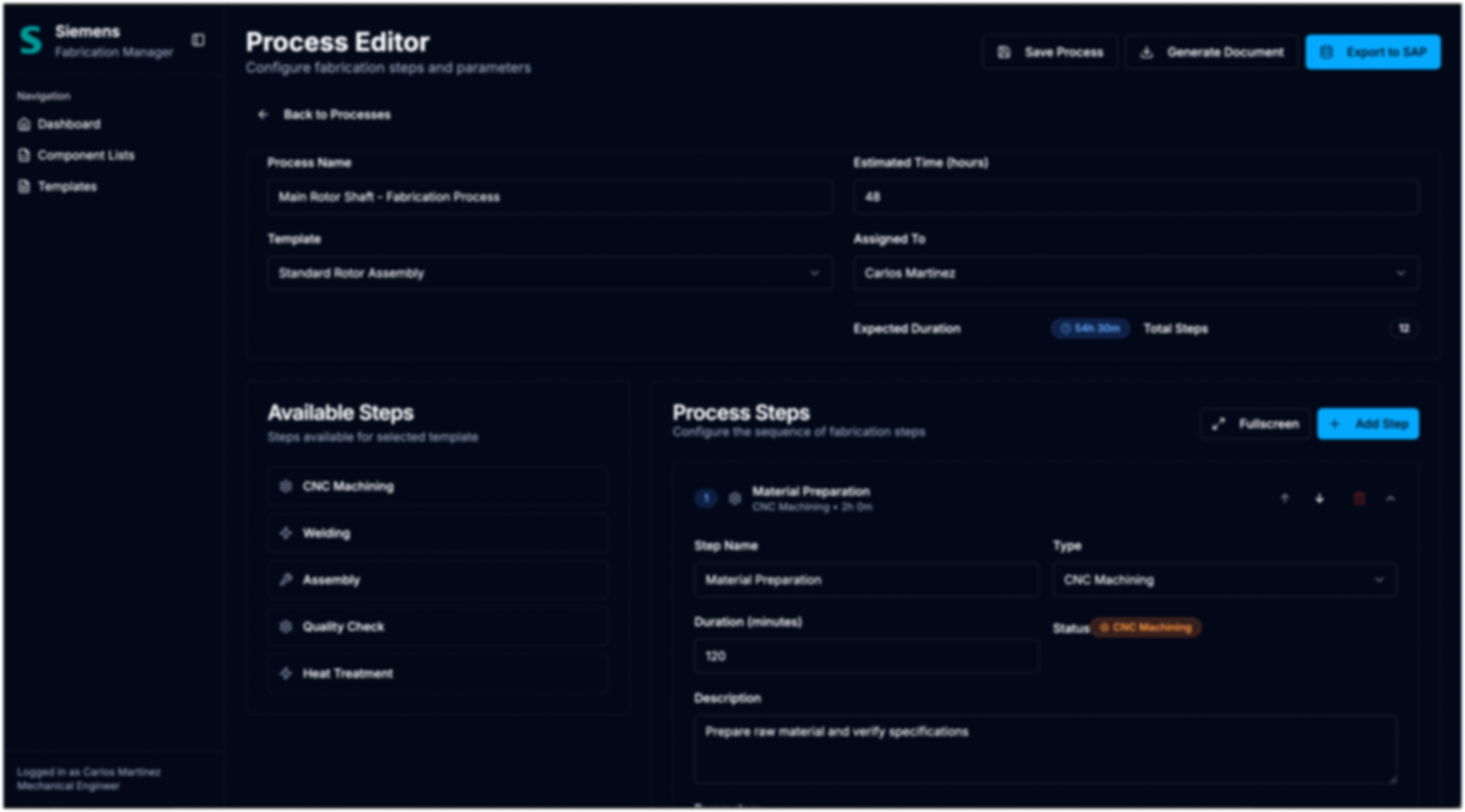
- Process Editor:
- - Drag-and-drop steps using predefined templates to create new fabrication routes.
- - Customizable durations, parameters, and documentation fields for each step.
- - Optimized for quick process creation while ensuring consistency and compliance.
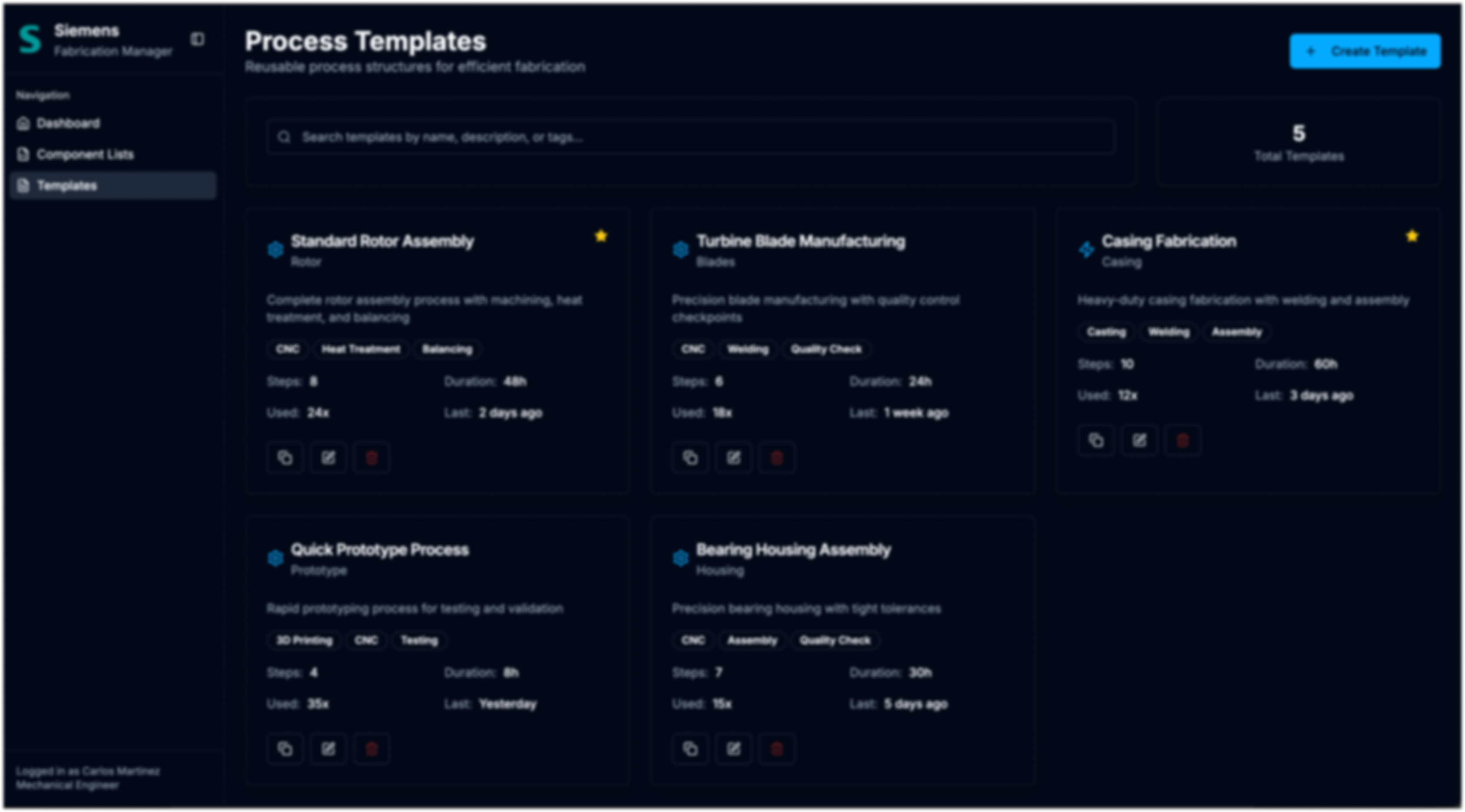
- Fabrication Process Templates:
- - Reusable blocks for repetitive processes like "Standard Rotor Assembly" or "Blade Manufacturing".
- - Improves standardization and reuse across projects.
- - Saves engineers time and minimizes human error during creation.
- Smart Data View:
- - Preview full process specs before exporting, including manufacturing parameters, tolerances, and tool specs.
- - Increases confidence and reduces last-minute SAP corrections.
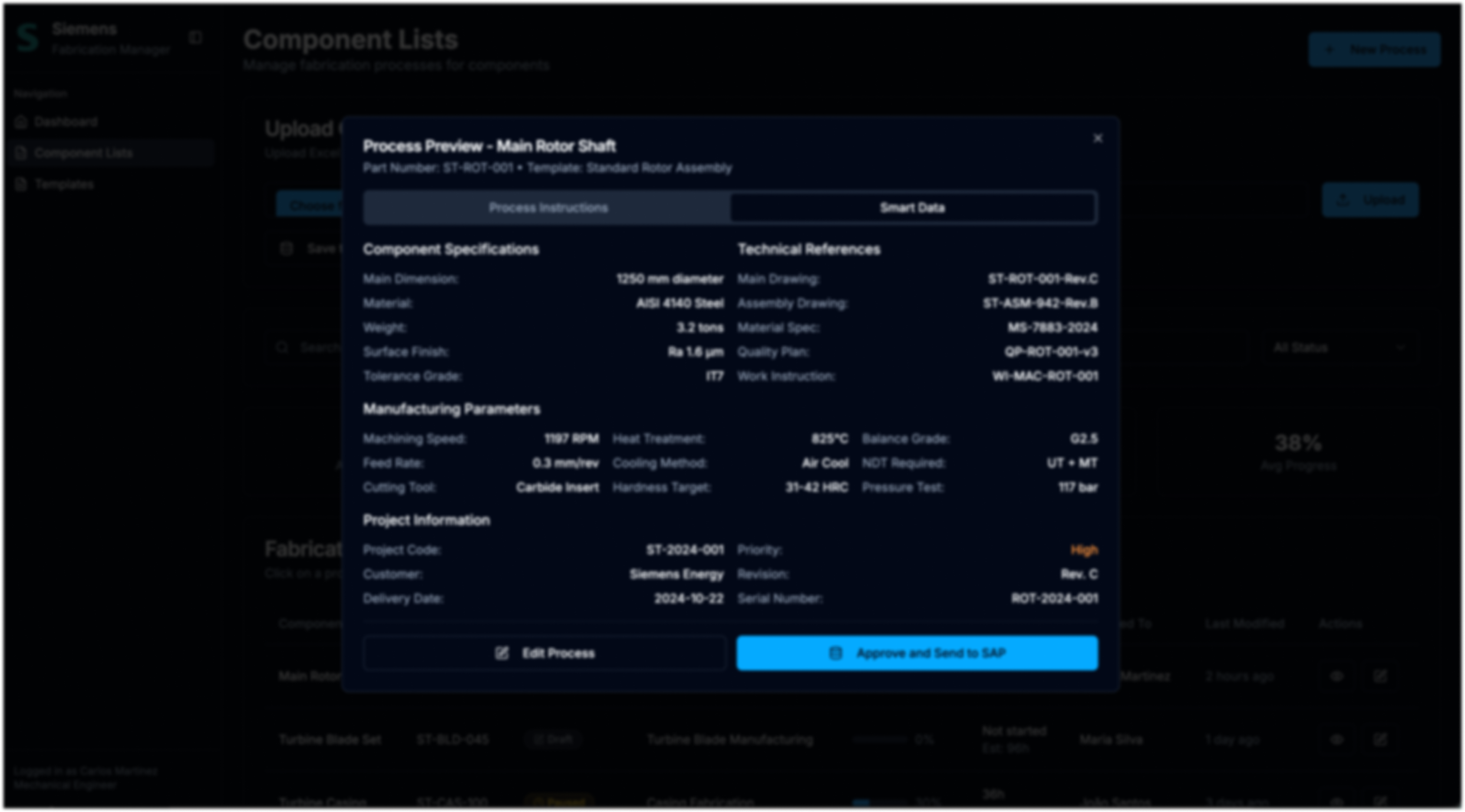
- One-click SAP Integration:
- - Finalize your work with a single button that pushes everything directly to SAP.
- - Reduces human error, avoids copy-paste chaos, and ensures compliance with internal documentation protocols.

Conclusions & Impact
By embedding myself in the reality of the factory floor, spending months juggling between design, engineering, and emergencies, I was able to co-create a system that truly fits into the workflow of the people who keep the turbines running — and by extension, power cities, countries, and millions of lives.